
“For the sake of mental stability and even physiological health, the unconscious and the conscious must be integrally connected and thus move on parallel lines. If they are split apart or “dissociated,” psychological disturbance follows. In this respect, dream symbols are the essential message carriers from the instinctive to the rational parts of the human mind, and their interpretation enriches the poverty of consciousness so that it learns to understand again the forgotten language of the instincts.”
C.G. Jung, Man and His Symbols
The Art of Psychotherapy
The word psychology originates from the Greek word psyche (meaning spirit or soul) and -logia, a suffix which is rooted back into the Greek noun logos meaning speech, account or story. In its oldest sense, psychology is a soul story.
Jungian psychology seeks to listen and understand Psyche in this way, offering a holistic psychological therapy that includes not only your thoughts, beliefs, emotions, motives, feelings, behaviour and body but also the unknown aspects of your being. Jungian psychology is the origin of what we now refer to as “parts work” in simplified modalities such as Internal Family Systems.
The unknown aspects of your being are referred to as your unconscious. Your conscious mind—your ego—does not and cannot control and determine this aspect of your being. For thousands of years, humankind has looked to this aspect—the more-than-ordinary world—as a source of wisdom and guidance. By restoring this connection, Jung pioneered a meaningful way to understand and attend to our modern-day struggles and challenges.
Our work together holds the door open to new life by receiving what arises from this aspect of your nature by the way of dreams, body symptoms, compulsive behaviours, emotional states or moods, unexpected happenings, daydreams, art making, intuitions, and synchronistic events. Many clients find working with their Psyche and learning how to understand its symbolic language to be tremendously insightful, supportive and valuable.
Our modern culture as a whole has lost awareness of this aspect of our psychological nature. As descendants of the Scientific Revolution of the 16th and 17th centuries in Europe, we lean heavily upon controlled methods and predictable outcomes. However, one of primary gifts of Jung’s work is that he restored value to the unconscious part of our psychological nature as a result of witnessing the psychological imbalance (neurosis) and suffering that results when the ego (conscious mind) is fragmented and uprooted from the holistic and instinctual wellspring of the psyche.

Photo: Lisa Holien
“One does not become enlightened by imagining figures of light, but by making the darkness conscious.”
C. G. Jung, The Collected Works of C.G. Jung: Alchemical Studies
We can become disconnected from our inner well wisdom as a result of psychological trauma. In the oldest sense of the word, trauma means a wounding. We learn to abandon ourself as a survival response or coping strategy. We ignore our inner voice, find it difficult to set boundaries, to say “no,” and often minimize our feelings . We satisfy other people’s needs while ignoring our own. We undertake trying to fix relationships and other people’s moods. We are frequently in states of anxiety and even confusion. We may feel as though we are drifting through life, without a real sense of what we actually think or feel. We may lack the confidence to express ourselves or be paralyzed by an inner self critic who demands perfection.
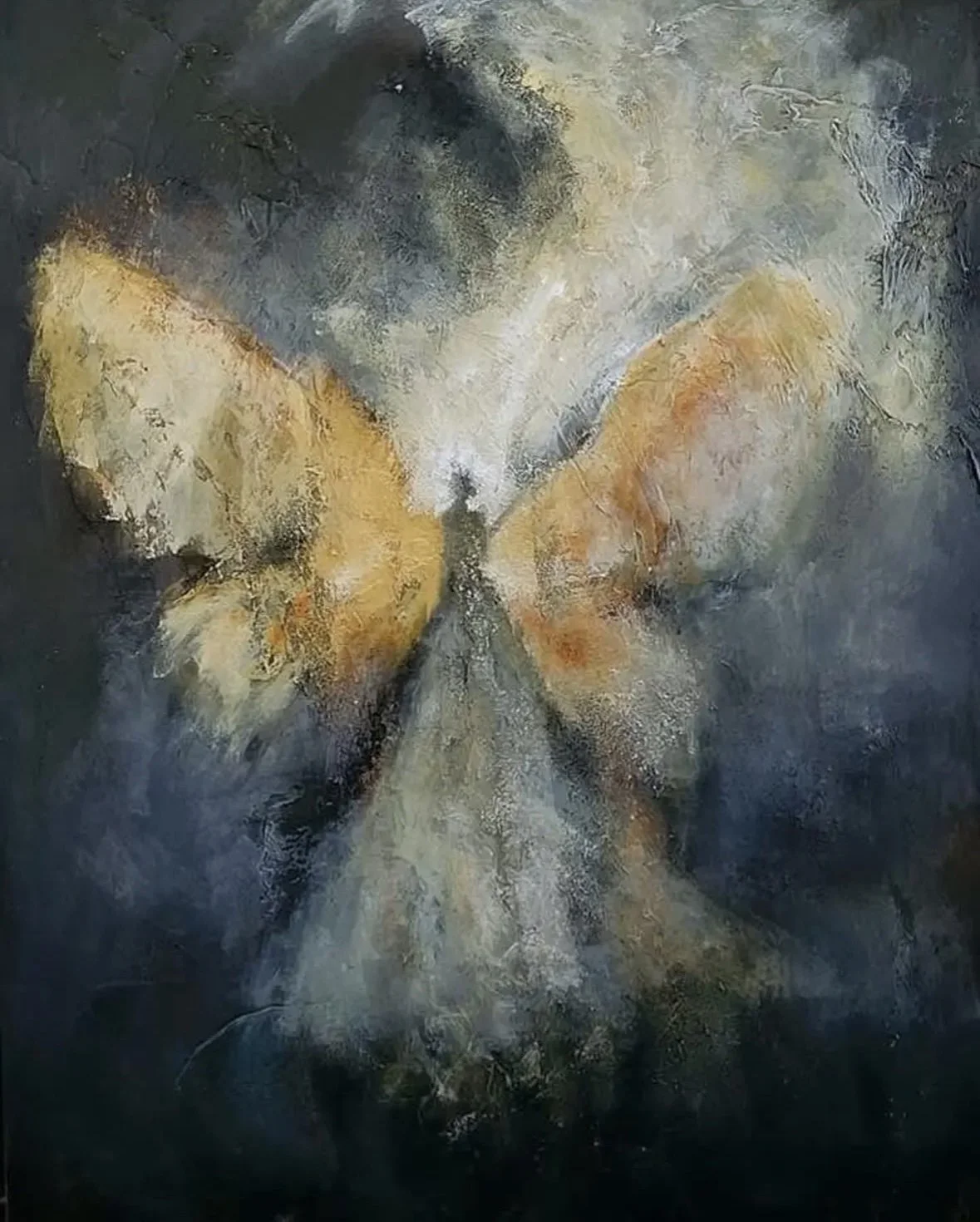
Our work together will help you recover parts of yourself that have been split off or undeveloped. To heal means ‘to become whole.’ This process of recovery and conscious integration is vital to helping you experience both yourself and life in a new way and restoring a faith and trust in yourself, the meaning of self-confidence. That such soulful transformation is possible is kept alive in the image of the butterfly, the delicate being who undergoes an amazing transformation and was once called Psyche.

Photo: Lisa Holien
Complementary Therapeutic Approaches
-
This psychotherapeutic approach views the family as an interconnected system, rather than just focusing on individual family members. It looks closely at patterns, roles, communication and relationships.
It can help you by:
Identifying root causes.
Improving relationships.
Establishing healthier dynamics with family member(s).
Improve your communication.
Feel better in your relationships.
-
This type of therapy that focuses on the connection between thoughts, emotions, and behaviours. The key idea is that our thoughts and perceptions shape how we feel and act, so changing unhelpful thought patterns can improve emotions and behaviours.
-
This therapy combines mindfulness and body awareness to help you manage stress. The key idea is to pay attention to the present moment in a non-judgemental way (accepting experiences instead of labeling them “good” or “bad”) rather than getting caught up in worries about the past or future. This can help you:
Notice stress triggers early.
Pause before reacting automatically.
Respond with awareness instead of habit.
Reduce stress and anxiety.
Discover new choices and actions.
-
A type of psychotherapy that involves reflecting on and evaluating one’s life experiences—both positive and negative—to find meaning, resolve unresolved issues, and improve psychological well-being. Revisiting the past often allows people to process unresolved grief, guilt, or trauma in a safe and structured way. This helps to reframe negative memories, highlight strengths, and identify life lessons.
Artist: Paula Jones